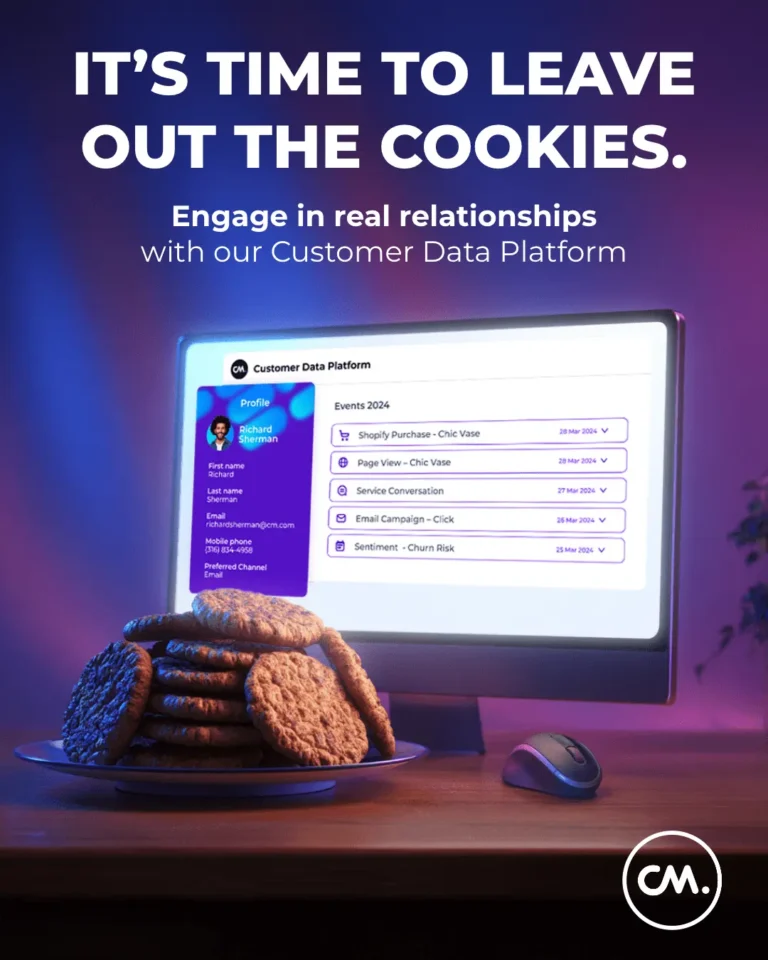

Holiday messages used to stand out. Holiday broadcasts used to work. Now they blend into the noise.
Shoppers receive more messages in December than any other month. Most are repeated reminders and generic promotions.
But customers no longer trust broadcast messaging the way they once did. After years of over-sending, generic blasts feel less like helpful reminders and more like noise. When relevance drops, attention drops with it. Modern shoppers have learned to scroll past anything that feels mass produced.
The problem isn’t the volume. It is the lack of relevance.
Customers want messaging that reflects what they actually care about.
Irrelevant messages feel disconnected. Customers close emails within seconds when they seem mass produced.
McKinsey studies show that personalization increases satisfaction and influences whether shoppers return.
Personalized messaging is not optional anymore. It is expected.
What customers respond to now: real personalization, not surface personalization
Shoppers interact more with messages tied to their actual behavior and interests.
Real personalization includes recommendations and reminders informed by browsing, purchases, and availability.
- Messages tied to the customer’s browsing or purchase history
- Recommendations that reflect what they clicked or asked about
- Reminders connected to shipping timelines in their region
- Alerts based on inventory that is still in stock
- Follow ups that reflect a previous conversation
This is not first name personalization. It is behavioral relevance.
Data from Twilio shows that 56 percent of consumers say they will become repeat buyers after receiving personalized messaging that feels relevant to their interests.
Relevant communication builds trust and leads to stronger conversion.
The real barrier: scattered customer data
Many brands want to personalize, but disconnected systems limit what is possible.
Common challenges include scattered data and tools that do not talk to one another.
- Data scattered across multiple tools
- Customer profiles split between marketing and customer service
- Agents unable to see which campaigns triggered inbound questions
- AI systems that cannot personalize because data is incomplete
Without unified data, personalization remains shallow and broadcasts feel generic.
What high performing brands do differently
The most effective brands send fewer but more meaningful messages during the holidays.
They rely on relevance, two way communication, and connected data.
1. Send fewer messages that match real customer behavior.
Unified customer profiles allow brands to filter out irrelevant blasts and send only the messages that matter.
2. Use two way messaging to build trust and offer support quickly.
Instead of repeating the same broadcast, these brands invite conversations. They answer questions quickly. They adapt recommendations in real time. AI supports this by handling simple replies instantly, which keeps the experience responsive.
3. Use connected data to send timely and predictive messages.
When browsing behavior, purchase history, and past conversations flow into one profile, messaging becomes predictive instead of reactive. That is what separates meaningful communication from noise.
A report from Salesforce found that 73 percent of customers expect companies to understand their unique needs and expectations.
Customers return to brands that demonstrate understanding through personalized communication.
Why broadcast messaging has stopped working
Broadcast messaging fails because it ignores preferences and cannot adjust in real time.
- They ignore individual preferences
- They flood channels customers did not ask for
- They cannot adapt based on real behavior
With so many options, irrelevant messages feel intrusive.
What customers want instead: connection, not volume
Shoppers trust brands that communicate clearly, quickly, and with intent.
They want messages that respect their time and match their behavior.
- Messages that respect their time
- Responses that match their urgency
- Recommendations that align with their behavior
- Conversations that feel like a service, not a campaign
In peak seasons, relevance is what customers notice most.
Final thought: Trust is built through connection, not broadcasting
High volume does not guarantee sales. Personalization is what drives results.
Expectations rise each year. Brands that prioritize relevance build loyalty.
Relevance will determine which brands stand out in 2025.